Some things really were better back then
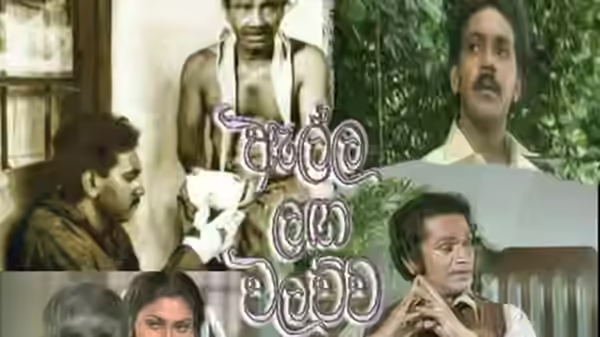
I watched Ella Langa Walawwa (ඇල්ල ළඟ වලව්ව) for the second time in October 2026, after finding a decent copy uploaded to YouTube on Thissa Madawela’s channel.
Originally aired in 1988, it was directed by Dharmasena Pathiraja, with a screenplay by Nimal Senanayake and music by Premasiri Khemadasa.
Being from such an early period of Sri Lankan television, the picture quality isn’t great. Some of the darker scenes are genuinely difficult to make out, and there are a few rough edits. But in terms of the plot and direction, I still think it’s better than probably 99% of the teledramas we get in Sri Lanka today.
That might sound like an exaggeration, but after watching it twice, I really don’t feel it’s that far off.
A mystery at an old walawwa
Some plot details and mild spoilers below.
The story takes place around an old walawwa, or manor house, in a rural area near Kegalle.
It starts when members of an upper-class family arrive at the property after not hearing anything from the people living there for years. They discover that the heir, Greshen (played by Jackson Anthony), has apparently gone abroad to study without telling anyone. The only person still looking after the house is the longtime servant, Appu Hamy.
But things don’t add up. Villagers claim the house is haunted, some even believe Greshen is dead and haunting the place, and there are stories of murders connected to the area.
So the visiting family calls in a relative known as Doctor Uncle, played by Ravindra Randeniya, to investigate.
From the beginning, it feels different from a typical television drama. There is no comfortable romance or reassuring, feel-good direction to the story. It’s unsettling, sometimes deliberately uncomfortable, and it leaves you with mixed feelings about who is actually good or bad.
And Khemadasa’s background score adds so much to that atmosphere. It doesn’t just accompany the mystery. It makes the whole experience more disturbing and memorable in the best way.
Sherlock Holmes, but surprisingly at home in Sri Lanka
One of the most interesting things is that the plot doesn’t feel entirely original. I can see strong similarities with a few Sherlock Holmes stories, especially The Hound of the Baskervilles and The Adventure of the Missing Three-Quarter.
You could look at that and think the drama simply copied a few foreign stories. But considering the resources available and how early this was in Sri Lankan television, I think the adaptation is remarkably well done.
The characters and events never felt as though they had been forced into a Sri Lankan setting just to make the story work.
Doctor Uncle is basically a local Sherlock Holmes. Randeniya’s performance can feel a little overacted at times, but the character is given a background that makes him believable within the story. He’s a doctor who has spent decades overseas and has an interest in researching supernatural incidents.
It’s an unusual character, but somehow it works.
The details make the world feel real
Another thing I loved was how the drama places its story in a particular period.
The events seem to be set around the early 1940s, before Hitler’s invasion of the Soviet Union. The characters discuss the ongoing war, and those conversations sometimes have a real connection to what’s happening in the story.
They aren’t just there for decoration. They remind you that the world outside this manor still exists and that the viewer is expected to pick up on these details.
It’s a small thing, but it makes the drama feel much less shallow. You have to pay attention, think about what’s being said, and piece things together yourself.
Appu Hamy might be the real heart of the story
The cast is excellent, but Cyril Wickramage as Appu Hamy stands out the most for me.
He starts as what appears to be a minor character: the loyal servant who has spent years looking after the manor and its family.
But as the mystery unfolds, the story turns that idea on its head. By the end, it almost directly tells you that Appu Hamy was the main character all along.
That reveal also brings out something much bigger than the haunted-house mystery. It makes you think about the relationships between the elite family and the people who served them, and whether those social divisions and the way people treated each other were ever right.
It’s the sort of ending that doesn’t give you a neat, comfortable answer. It leaves you thinking about the characters long after it’s over.
Worth keeping?
Absolutely. A must-watch for anyone interested in Sinhala television, especially if you enjoy mysteries that don’t explain everything or leave you feeling completely comfortable.
Despite the old footage, a few editing imperfections, and moments where the acting is a little theatrical, I never found it boring or stretched out. Even on my second watch, the story moved quickly enough to keep me interested.
There are plenty of dramas with better cameras and cleaner production today, but very few that give me the same experience as Ella Langa Walawwa.
Further reading: About the teledrama, its cast and production.
Loading comments…