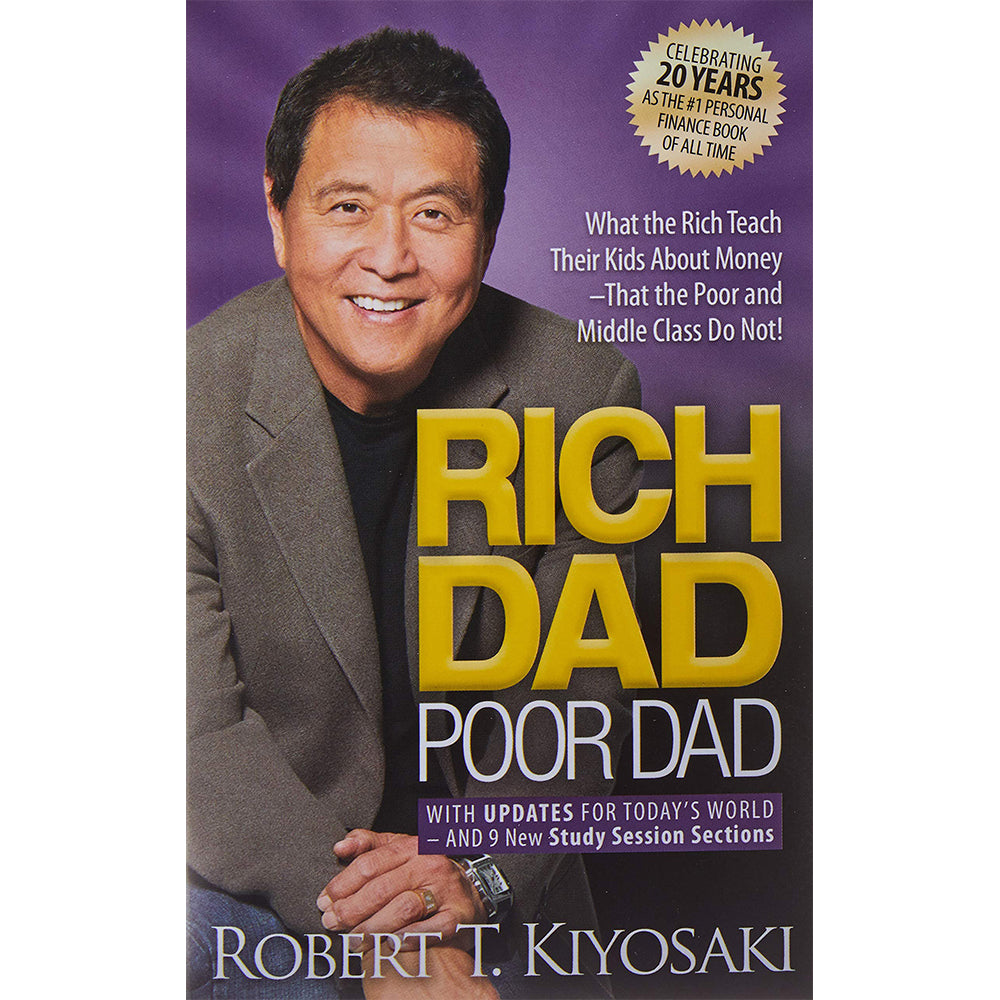
I can understand why this book is everywhere
Rich Dad Poor Dad is probably one of the most popular self-help and financial advice books in the world. It gets recommended so often that it’s almost impossible not to have heard of it.
I listened to an audio summary rather than the full book, and I can understand the hype.
The main thing it challenges is the conventional path we’re taught to follow: study hard, get a good job, work your way up, and earn a comfortable salary. Kiyosaki argues that we should also learn how to make money work for us, rather than spending our entire lives working for money.
I don’t think every idea in the summary was groundbreaking, but there were definitely a few worth keeping.
The rich don’t work for money
The first lesson is about escaping what the book calls the rat race.
It’s easy to get stuck in a cycle of working, earning a salary, paying bills, increasing our spending as we earn more, and then having to keep working just to maintain the same lifestyle.
The book encourages building assets and sources of income that aren’t entirely dependent on your day job.
This is one of the ideas I can align with. I’d rather work towards a future where I’m not forced to keep working just to cover my expenses. The idea of investing for that kind of freedom makes sense to me, even if getting there isn’t as straightforward as the book sometimes makes it sound.
Learn about money, not just how to earn it
The second lesson is financial education.
We spend years learning things that help us get a job, but many of us spend surprisingly little time understanding what to do with the money we earn.
The summary encourages learning about investing, stocks, assets, liabilities, and how different financial systems work.
I think that part is reasonable. Even if someone isn’t trying to become rich or start a business, understanding the basics of money seems like a useful life skill.
Keep your job, but start building something of your own
One of the more practical ideas was not to abandon your salary immediately.
Instead, keep your day job, control expenses, avoid taking on unnecessary liabilities, and gradually put money into assets or a small business on the side.
The examples that stood out were expensive cars and houses. It’s tempting to spend more as your income increases, especially on things that look like signs of success, but that can also mean taking on years of additional expenses.
I don’t think buying a house or a car is automatically a bad financial decision. But I do like the idea of asking whether something will improve your long-term financial position or simply increase the amount you have to earn every month.
Understand how taxes work
The fourth lesson was about learning the tax system.
Kiyosaki argues that the middle class often ends up carrying a heavier burden because businesses and corporations have access to legal ways of structuring expenses and income that regular employees don’t.
I can see the point he’s trying to make: understanding taxes is part of understanding money, and it isn’t something we should ignore until it’s time to pay them.
At the same time, I wouldn’t take the book’s broader claims about who pays more tax as universally true. The rules depend on the country, the type of income, and the circumstances.
For me, the useful lesson is simply to learn how the tax system actually works instead of making assumptions about it.
Making money takes some guts
This was one of the more interesting points.
The book argues that creating wealth also requires the courage to take risks, accept the possibility of losing money, make decisions, and look for opportunities that other people might avoid.
I can relate to the general idea. When you always choose the safest and most conventional option, it’s easy to become comfortable with where you are and stay at roughly the same level for years.
Of course, being brave and being reckless are not the same thing. Taking a risk doesn’t automatically make it a good decision.
But I do think there is something valuable in being willing to try things and accept that not every attempt will work.
Work to learn, not only to earn
The last lesson is about learning broadly.
The summary encourages gaining different skills, meeting people, understanding businesses, and choosing work based partly on what you can learn from it rather than only how much it pays.
It also takes a fairly dismissive view of spending years on higher education, such as pursuing a PhD, if your main goal is to make money.
I’m not sure how much I agree with that.
There are plenty of good reasons to specialise deeply in a subject that have nothing to do with becoming wealthy. But I can understand the argument if your primary goal is financial success. Spending years developing expertise in a very narrow field may not always be the most direct way to increase your income.
I think it depends on what you actually want from your life, not just how much money you want to make.
Worth keeping?
Overall, I can see why Rich Dad Poor Dad became so popular.
It encourages people to question a path that often feels like the only option: study, get a job, earn, spend, and repeat. That change in perspective is probably more important than any individual piece of advice.
At the same time, a lot of the ideas felt fairly intuitive once I heard them, and I didn’t come away feeling that I’d discovered something completely new. Some of the arguments also seem a little too simplified for real life.
Still, there are useful things here to remember and apply, particularly about financial education, managing expenses, and becoming less dependent on a salary over time.
For me, the summary was worthwhile. I understand the hype, even if I wouldn’t agree with every lesson without questioning it first.
Loading comments…